
Zero Trust Architecture for Hybrid Cloud and Edge Computing 2026

Zero Trust Architecture for Hybrid Cloud and Edge Computing 2026

In the architectural landscape of 2026, the “Network Perimeter” has officially been declared dead. The shift toward hybrid cloud and the explosion of edge computing have rendered the legacy “Castle-and-Moat” security model not only obsolete but dangerous. As organizations distribute workloads across on-premises data centers, multiple public clouds, and “far-edge” IoT devices, the only constant is identity.

Modern security now relies on Zero Trust Architecture (ZTA), a framework where trust is never implicit and must be continuously evaluated based on identity, context, and real-time risk. Guided by the finalized NIST SP 1800-35 standards, ZTA in 2026 has evolved into an autonomous, identity-centric fabric that secures the most distributed environments.

1. The 2026 Landscape: Identity as the New Perimeter

By 2026, the primary challenge for CISOs is “visibility collapse.” With 70% of enterprise data now processed at the edge or in transit between clouds, traditional firewalls cannot “see” the traffic …

Zero Trust Architecture for Hybrid Cloud and Edge Computing 2026 Read More
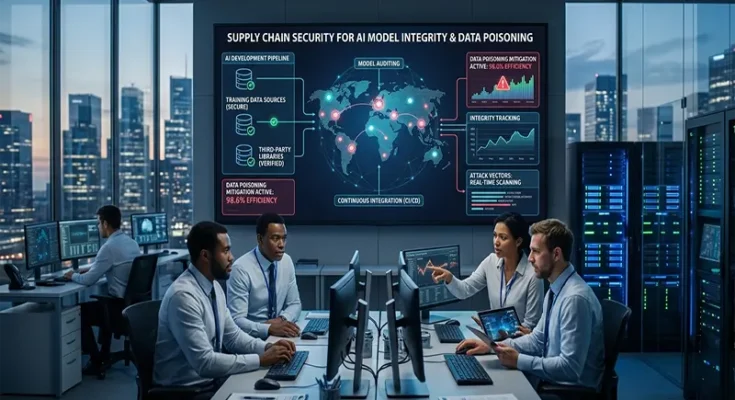
Supply Chain Security for AI Model Integrity and Data Poisoning

Supply Chain Security for AI Model Integrity and Data Poisoning

As organizations transition from experimental AI to mission-critical “Agentic” workflows, the security perimeter has shifted. We are no longer merely securing code; we are securing the AI Supply Chain—a complex, often opaque pipeline of raw data, pre-trained weights, fine-tuning datasets, and specialized hardware.

In 2026, the traditional Software Bill of Materials (SBOM) is being superseded by the AI-BOM, as security architects realize that a model’s “logic” isn’t found in its source code, but in the trillion-dimensional latent space of its weights. Ensuring the integrity of this pipeline against data poisoning and weight tampering is the defining cybersecurity challenge of the autonomous era.

1. The New Attack Surface: Code vs. Weights

To secure AI, we must first understand how its supply chain differs from traditional software.

FeatureTraditional Software Supply ChainAI Model Supply Chain
Primary ArtifactHuman-readable Source CodeOpaque Model Weights (Tensors)
Vulnerability TypeLogic Errors, Buffer
Supply Chain Security for AI Model Integrity and Data Poisoning Read More
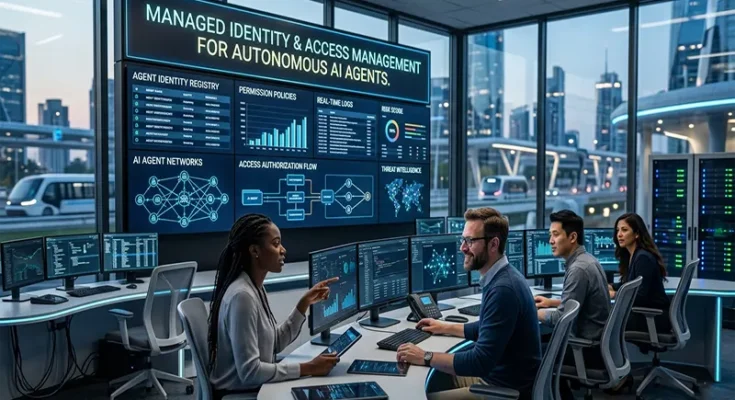
Managed Identity and Access Management for Autonomous AI Agents

Managed Identity and Access Management for Autonomous AI Agents

The rapid proliferation of Agentic AI has introduced a new class of digital actor: the autonomous agent. Unlike traditional bots or static service accounts, these agents possess the ability to reason, plan, and execute multi-step workflows across disparate software ecosystems. While this represents a leap in productivity, it has created a “visibility collapse” for traditional Identity and Access Management (IAM) frameworks.

In 2026, as enterprises move from experimental LLM wrappers to fully autonomous business operations, the perimeter is no longer the network or even the user—it is the Agent Identity. Managing these Non-Human Identities (NHI) requires a shift from static permissions to a dynamic, managed identity lifecycle.

1. The Machine-Speed Actor: Why Traditional IAM Fails

Traditional IAM was built for two types of entities: humans (who are slow and predictable) and service principals (which are rigid and perform specific, pre-defined tasks). Autonomous AI agents sit in a dangerous middle …

Managed Identity and Access Management for Autonomous AI Agents Read More
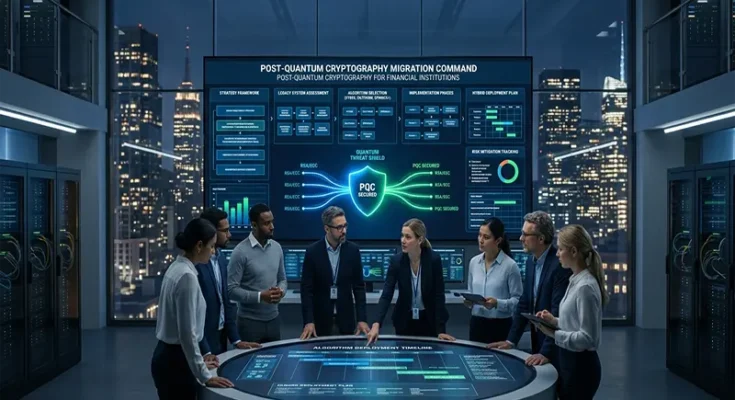
Post-Quantum Cryptography Migration Strategies for Financial Institutions

Post-Quantum Cryptography Migration Strategies for Financial Institutions

The financial sector operates on a foundation of digital trust. This trust is currently secured by public-key cryptography (RSA, ECC) that relies on the mathematical difficulty of factoring large integers or solving discrete logarithms. However, the horizon of cybersecurity is shifting. With the steady advancement of quantum computing, the algorithms currently shielding trillions of dollars in global assets are facing an existential threat.

For financial institutions, the transition to Post-Quantum Cryptography (PQC) is not a routine patch—it is a mandatory, decade-long modernization of the global financial plumbing.

1. The Dual Threat: “Q-Day” vs. HNDL

The industry often discusses “Q-Day”—the theoretical point at which a Cryptographically Relevant Quantum Computer (CRQC) can execute Shor’s Algorithm to break current encryption. While experts debate whether this is 5, 10, or 15 years away, financial institutions face a more immediate crisis: Harvest Now, Decrypt Later (HNDL).

In an HNDL attack, adversaries intercept and …

Post-Quantum Cryptography Migration Strategies for Financial Institutions Read More
AI-Powered Autonomous SOC for Real-Time Threat Orchestration

AI-Powered Autonomous SOC for Real-Time Threat Orchestration

The traditional Security Operations Center (SOC) is under siege. As cyber adversaries weaponize generative AI to automate phishing, polymorphic malware, and credential stuffing, the gap between “Time to Compromise” and “Time to Detect” is widening. Human-centric SOCs are currently drowning in a sea of telemetry: a typical enterprise receives over 10,000 alerts per day, of which nearly 50% are false positives or duplicates.

The result is alert fatigue, a condition where critical indicators of compromise (IoCs) are buried under noise, and the Mean Time to Remediate (MTTR) is measured in days, not minutes. To survive the next generation of cyber warfare, organizations must pivot from reactive monitoring to an AI-Powered Autonomous SOC—a system capable of real-time threat orchestration without waiting for a human to click “approve.”

1. The Crisis of the Modern SOC: The Human Bottleneck

The fundamental flaw in modern cybersecurity is the mismatch in speed. Ransomware …

AI-Powered Autonomous SOC for Real-Time Threat Orchestration Read More