How Reseller Hosting Can Benefit Your Customer?

How Reseller Hosting Can Benefit Your Customer?

Running a reseller hosting business is quite lucrative nowadays. It offers the opportunity to earn a steady passive income and start your own business with minimal investment.

If you’ve been looking for a bright business opportunity, consider this idea. However, if you want to know how it can benefit your customers,  keep reading below.

Why Run a Reseller Hosting Business?

Setting up a traditional web hosting service requires technical expertise and investment in high-end servers and other infrastructure. However, one benefit of reseller hosting is that you only pay for the subscription.

The provider handles everything else, from servers to server cooling infrastructure and overall management. You can save significant money initially.

How Reseller Hosting Can Benefit You and Your Customer?

High Uptime

Uptime is the percentage of time your clients’ websites remain active over a given period, such as a month or a year.  One advantage of reseller hosting …

How Reseller Hosting Can Benefit Your Customer? Read More

AI-Driven Mental Health and Wellbeing Support Systems for Universities

AI-Driven Mental Health and Wellbeing Support Systems for Universities

The modern university campus is facing a silent crisis. In 2026, despite increased awareness, student mental health remains at a breaking point. Loneliness, “digital burnout,” and the relentless pressure of the global labor market have created a demand for support that far outpaces the capacity of traditional campus counseling centers. With waiting lists often stretching into months, universities are turning to AI-Driven Wellbeing Support Systems—not as a replacement for human therapists, but as a sophisticated, 24/7 triage and early-intervention layer that ensures no student falls through the cracks.

By integrating “Empathic AI” with clinical frameworks, institutions are moving toward a proactive model of care that identifies distress before it reaches a state of crisis.

1. The Stepped Care 4.0 Framework

The most effective university implementations in 2026 follow the Stepped Care 4.0 model. This framework uses AI to match the intensity of the intervention to the specific needs of …

AI-Driven Mental Health and Wellbeing Support Systems for Universities Read More
Supply Chain Security for AI Model Integrity and Data Poisoning

Supply Chain Security for AI Model Integrity and Data Poisoning

As organizations transition from experimental AI to mission-critical “Agentic” workflows, the security perimeter has shifted. We are no longer merely securing code; we are securing the AI Supply Chain—a complex, often opaque pipeline of raw data, pre-trained weights, fine-tuning datasets, and specialized hardware.

In 2026, the traditional Software Bill of Materials (SBOM) is being superseded by the AI-BOM, as security architects realize that a model’s “logic” isn’t found in its source code, but in the trillion-dimensional latent space of its weights. Ensuring the integrity of this pipeline against data poisoning and weight tampering is the defining cybersecurity challenge of the autonomous era.

1. The New Attack Surface: Code vs. Weights

To secure AI, we must first understand how its supply chain differs from traditional software.

FeatureTraditional Software Supply ChainAI Model Supply Chain
Primary ArtifactHuman-readable Source CodeOpaque Model Weights (Tensors)
Vulnerability TypeLogic Errors, Buffer
Supply Chain Security for AI Model Integrity and Data Poisoning Read More
Integrating Sustainability and Green Skills into Higher Education Curricula

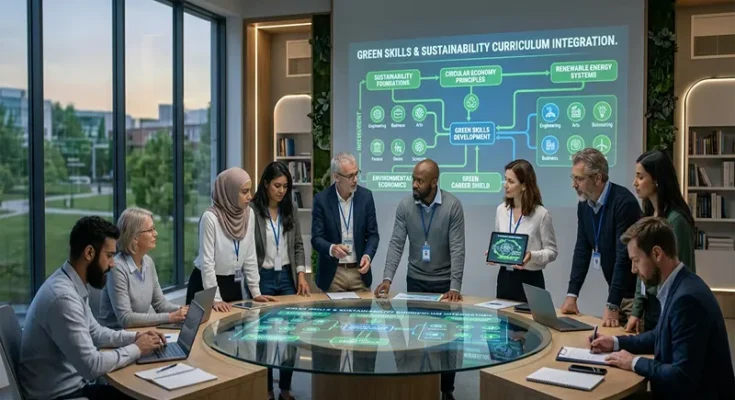
Integrating Sustainability and Green Skills into Higher Education Curricula

The global economy is currently undergoing a “Twin Transition”—the simultaneous evolution of digital transformation and the shift toward a net-zero, circular economy. By 2026, the demand for green skills has transcended niche environmental sectors, becoming a baseline requirement across finance, engineering, healthcare, and artificial intelligence. However, a significant “green skills gap” persists. To bridge this divide, higher education institutions must move beyond treating sustainability as a peripheral elective and instead embed it into the structural DNA of every degree program.

Integrating sustainability into curricula is no longer a matter of institutional prestige; it is a fundamental requirement for graduate employability and global climate resilience.

1. The “Green Skills” Imperative in the 2026 Labor Market

In the current professional landscape, “green skills” are defined as the knowledge, abilities, values, and attitudes needed to live in, develop, and support a sustainable and resource-efficient society. According to recent LinkedIn and ILO labor market …

Integrating Sustainability and Green Skills into Higher Education Curricula Read More
Managed Identity and Access Management for Autonomous AI Agents

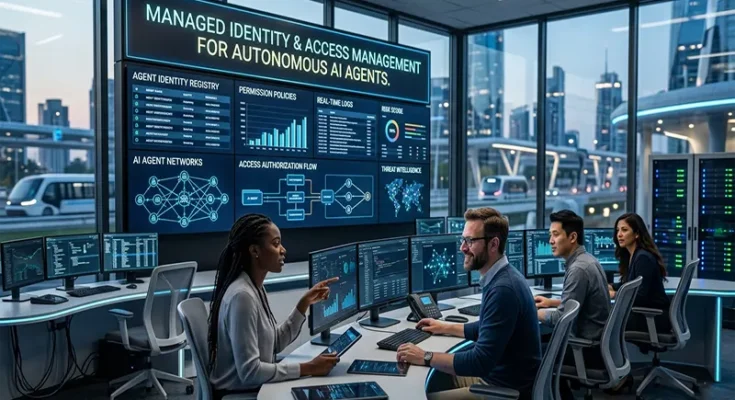
Managed Identity and Access Management for Autonomous AI Agents

The rapid proliferation of Agentic AI has introduced a new class of digital actor: the autonomous agent. Unlike traditional bots or static service accounts, these agents possess the ability to reason, plan, and execute multi-step workflows across disparate software ecosystems. While this represents a leap in productivity, it has created a “visibility collapse” for traditional Identity and Access Management (IAM) frameworks.

In 2026, as enterprises move from experimental LLM wrappers to fully autonomous business operations, the perimeter is no longer the network or even the user—it is the Agent Identity. Managing these Non-Human Identities (NHI) requires a shift from static permissions to a dynamic, managed identity lifecycle.

1. The Machine-Speed Actor: Why Traditional IAM Fails

Traditional IAM was built for two types of entities: humans (who are slow and predictable) and service principals (which are rigid and perform specific, pre-defined tasks). Autonomous AI agents sit in a dangerous middle …

Managed Identity and Access Management for Autonomous AI Agents Read More